
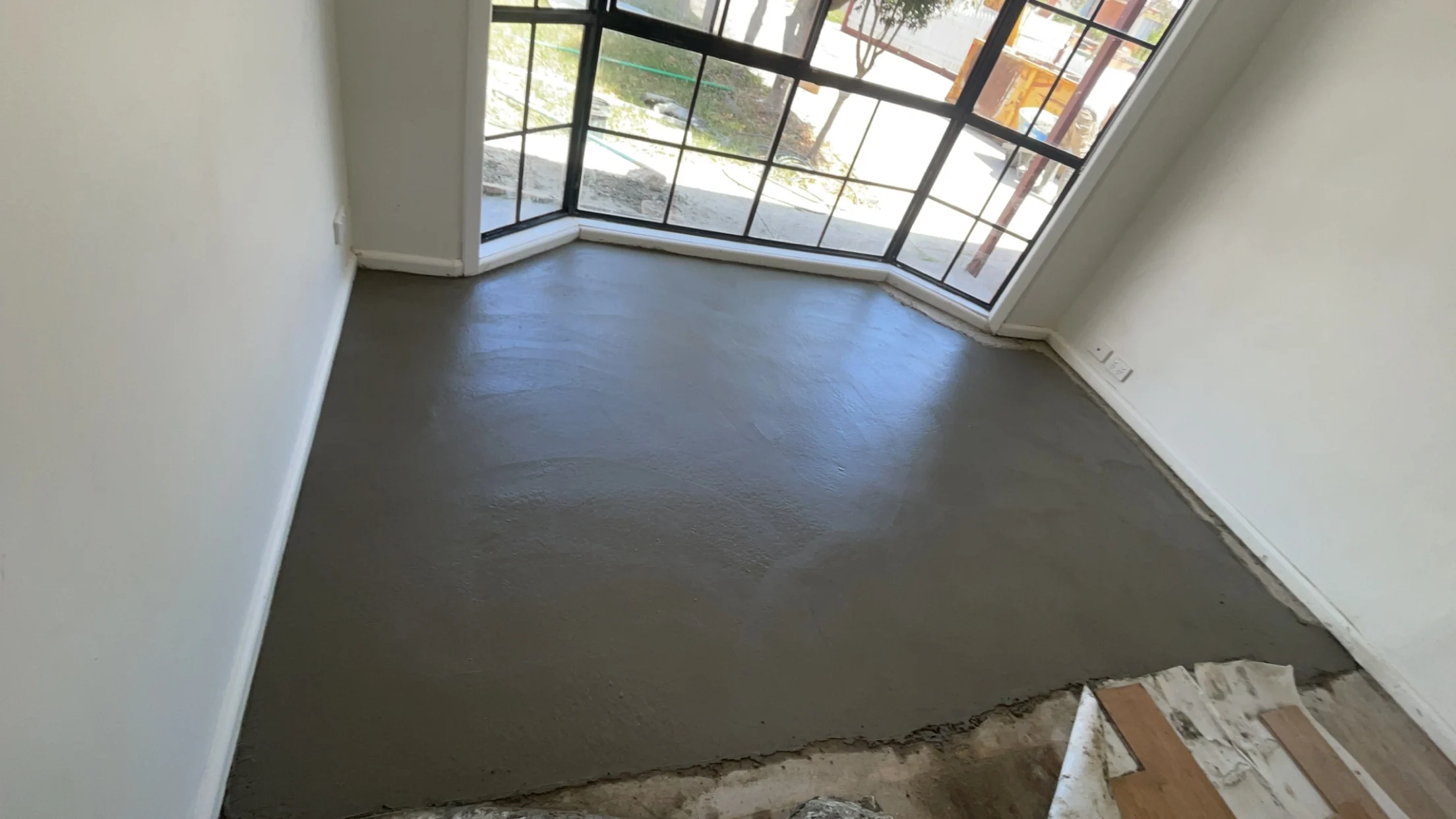

A useful concrete slab budget starts with a quote that matches the slab's purpose, the site and the work included. In Melbourne, two slabs with the same area can have different costs because their design, ground preparation, access and finish differ. A square-metre rate becomes useful when those details are clear.
There is no single installed price in this guide. A material-supply charge is not a finished-slab price, and a rate for a straightforward driveway cannot be applied to a building foundation without checking its design. The steps below help you compare the scope behind each figure and prepare for a project-specific quote.
Concrete slab cost per square metre
A cost per square metre describes a price divided by area. For a rectangle, multiply its length by its width: an area measuring 6 metres by 4 metres is 24 m². This is an area example only, not a recommendation for a slab's thickness, reinforcement or footing design. Irregular shapes need their own measurement, and the quoted area should be clear.
Before using a rate, ask whether it covers the installed slab or only part of the work. Concrete supply, delivery, excavation, disposal, formwork, reinforcement, placement and finishing are different items. A low figure can be incomplete if it excludes a task another quotation includes.
When comparing the cost of a concrete slab per m² in Australia, use like-for-like scopes. Check the intended use, dimensions, design, finish and tax treatment. Only then does multiplying the area by a rate provide a meaningful comparison. Smaller jobs can also carry setup and delivery costs that do not reduce in direct proportion to the area.
What changes the cost of a concrete slab?
Purpose and structural design
A slab must suit what it supports. A patio, driveway, garage and building foundation do different jobs. Loads, ground conditions, slab form and engineering requirements can change the amount of concrete, reinforcement, formwork and labour needed. YourHome's guidance on concrete slab floors explains why site conditions and slab systems need to be considered together.
If drawings or engineering are required, make them available to each contractor preparing a quote. A quotation based on a defined design is easier to compare than one based on an assumed thickness. Do not reduce structural requirements to reach an advertised square-metre rate.
Excavation, existing concrete and levels
The work below the finished surface affects the cost. Removing an old slab, taking excavated material off site, preparing a base and establishing levels are different from pouring onto a prepared area. A sloping site or a change in finished level can add work around edges, access and drainage.
Ask the quote to identify the demolition and excavation included, how spoil will be handled, and how additional work will be priced if unexpected ground conditions are found. The relevant condition is the actual site. General descriptions of a suburb cannot establish what lies beneath a particular slab.
Access and concrete delivery
Delivery access can affect how concrete reaches the work area. The contractor needs to know about narrow entrances, low clearance, long distances from the road and restrictions on vehicle access. These details can change the equipment, delivery arrangements and labour required.
Boral's Victorian Metro service-fee schedule shows that concrete supply can involve charges for small loads, waiting, delivery distance, waste and delivery outside normal hours. Those are examples of supplier-side variables, not 3rd Gen Concreting prices. Ask which delivery and placement costs are included in your installed quote and what could trigger an extra charge.
Surface finish and associated work
A specified decorative finish, edge detail or sealing treatment changes the scope. The quotation should name the finish and any surface treatment rather than leaving these choices to be assumed. Confirm whether adjoining paths, drainage work, connections to existing concrete and site clean-up are included.
The expected appearance and use need to be considered together. A finish chosen for a patio may not be the specification needed for vehicle traffic. Product care and return-to-use instructions also belong with the selected finish and construction programme.
Driveway slabs and building slabs
A concrete slab driveway cost should reflect vehicle use, ground preparation, levels and surface finish. A driveway crossing the public verge may also involve council requirements for the crossover. These items should be identified separately from the slab inside the property.
A building slab can include structural requirements connected to walls, footings and the building design. Comparing it with a driveway solely on square metres overlooks those differences. Our concrete slabs service information helps you identify the work to discuss, while the project's drawings establish the structural scope where required.
How to compare concrete slab quotes
Ask each contractor to describe the same job and state exclusions clearly. A written comparison is more useful than choosing a rate before the scope is agreed.
- Confirm the dimensions, intended use, drawings and specified finish.
- Check excavation, demolition, disposal, base preparation, formwork and reinforcement inclusions.
- Identify concrete supply, delivery, pumping or other placement arrangements and possible extra charges.
- Confirm associated drainage, sealing, clean-up, tax treatment and responsibility for required permits or inspections.
If one quote is lower, look for a difference in the work or assumptions before treating the saving as equivalent value. Ask how variations are documented and priced. The aim is a clear scope that both parties understand before construction begins.